Dive Destinations
Indonesia Diving Guide: Regions, Seasons and Best Dive Sites
Where and when to dive Indonesia — Raja Ampat, Komodo, Lembeh, Bali and the Banda Sea — with seasons, marine life, permits and photography tips.
- Region
- Coral Triangle
Indonesia is the most biodiverse dive destination on the planet, sitting at the very center of the Coral Triangle. More than 17,000 islands span three time zones, and the diving is not one thing but many — manta-filled reefscapes in the far east, world-class muck sites in the north, drift dives past sharks in the south, and gentle shore dives you can walk into from the beach. That variety is the reason divers keep coming back, and it is also the one thing you have to plan around: the country is big enough that no single season or region covers all of it.
This guide breaks Indonesia down by region, tells you when each is at its best, and covers the marine life, permits, and logistics that shape a trip. For a month-by-month view of how Indonesia fits alongside its neighbors, see the Southeast Asia diving calendar, the parent guide to the whole region.
When to dive Indonesia
Diving seasons here are governed by two opposing monsoons, so the right time to visit depends entirely on where you are going. Northern and eastern areas such as Raja Ampat dive best during the northwest-monsoon window of roughly October to April, when their seas are calmest. Southern areas including Bali and Komodo peak during the southeast-monsoon dry season of about April to November. In practice that means somewhere in Indonesia is in season every month of the year — you just match the destination to your dates rather than the other way around.
Where to dive in Indonesia
Raja Ampat
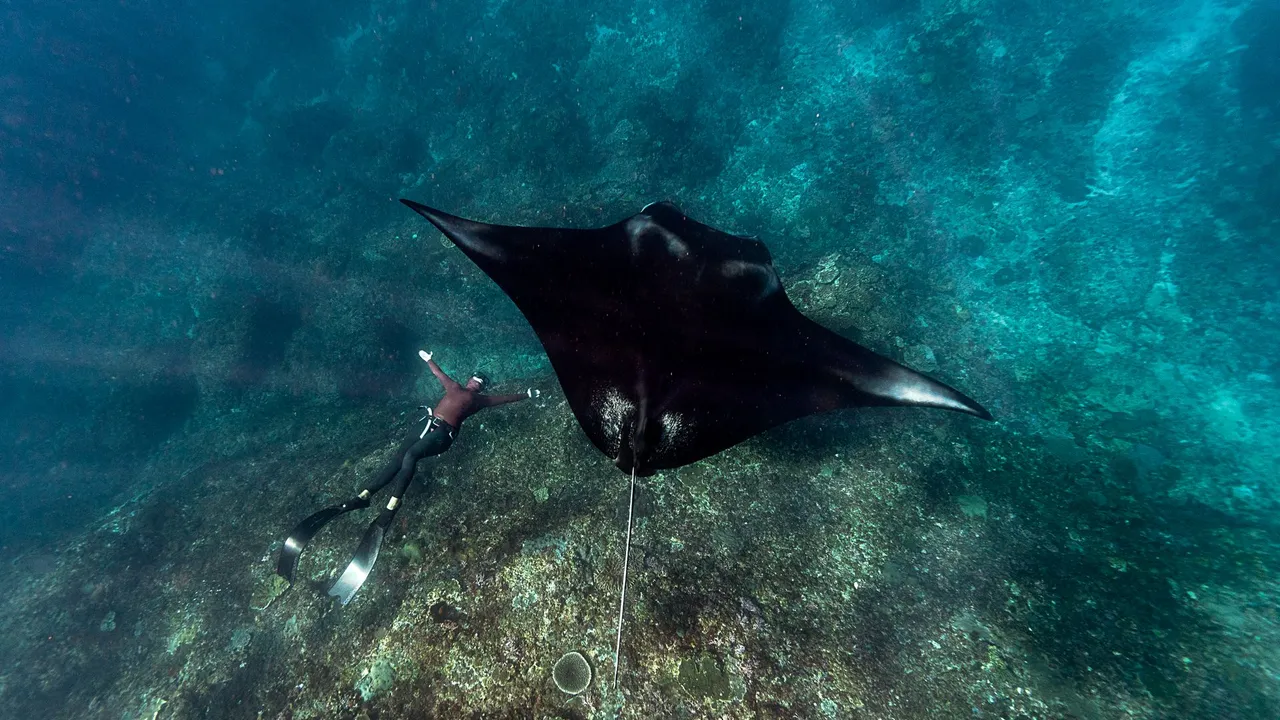
The headline destination, and for many divers the best reef diving on Earth. Raja Ampat’s four island groups hold staggering fish density, soft-coral walls that fill a fisheye lens, and manta cleaning stations that aggregate from December to March. It dives best from October to April; July and August are the rough off-season, though northern sites stay diveable. The far-flung reefs of southern Misool and the Dampier Strait’s manta sites are reached most easily by liveaboard, though land-based resorts around the strait are increasingly good.
Komodo
Inside Komodo National Park, cold upwellings from the south feed some of the most active diving in the country. The northern sites are warm, calm, and coral-rich, while the southern sites run cooler and faster, with manta trains at Karang Makassar and adrenaline drifts at Batu Bolong and Castle Rock. Komodo dives well through the dry season, roughly April to November, and mantas are present year-round. Both liveaboards and land-based operators out of Labuan Bajo run the park.
Lembeh Strait and Ambon
If your interest is the small and the strange, this is the center of the muck-diving world. Lembeh Strait in North Sulawesi turns up hairy frogfish, mimic octopus, flamboyant cuttlefish, and dozens of nudibranchs on a single black-sand dive, and Ambon in Maluku rivals it. Both are resort-based and good year-round, which makes them easy to combine with a wide-angle trip elsewhere.
Bali and Nusa Penida
Bali is the most accessible diving in the country and a fine place to start or to fill a few days. Tulamben’s shallow USAT Liberty wreck is a gentle shore dive that is busy for good reason, Amed offers easy reef, and the sites around Nusa Penida deliver both resident mantas year-round and, from July to October, mola mola rising on cold upwellings at Crystal Bay. The Penida sites can carry strong current, so they reward some experience.
The Banda Sea
Remote, liveaboard-only, and for experienced divers. The Banda Sea is dived in two short crossing seasons, roughly March to April and September to November, and rewards the journey with schooling hammerheads, dramatic seamounts, and — in season — mass fish spawning. It is a trip you plan a year out.
Wakatobi and Derawan
For a gentler pace, Wakatobi in Southeast Sulawesi trades adrenaline for pristine, easy reefs and reliable air and boat logistics, while Derawan off Kalimantan adds turtles, occasional whale sharks at nearby Talisayan, and a lake full of harmless stingless jellyfish on Kakaban.
Marine life highlights
Indonesia’s draw is the sheer breadth of what you can see. Wide-angle divers get manta cleaning stations, reef sharks, schooling barracuda and jacks, and coral cover that is among the healthiest anywhere. Macro shooters find pygmy seahorses, ghost pipefish, blue-ringed octopus, and a rotating cast of critters that changes site to site. Big-animal encounters include the Banda Sea’s hammerheads, whale sharks at Cenderawasih Bay in West Papua (present year-round), and Bali’s seasonal mola mola. It is one of the few places where a single itinerary can cover mantas, muck, and pelagics.
Permits, fees and logistics
Most trips route through a domestic hub: Denpasar (Bali) for the south, Manado for Lembeh, Sorong for Raja Ampat, and Labuan Bajo for Komodo. Internal flights are frequent but connections can be tight, so build in buffer time.
Raja Ampat is the one region with formal entry fees. As of 2026 there are two: a Marine Park Entry Permit (the environmental service fee), around 700,000 rupiah for international visitors and valid for twelve months, and a separate Visitor Entry Ticket of about 300,000 rupiah. You can pay both online before you travel or in person on arrival in Waisai, and patrols do check, so keep your tag or receipt. Bring cash in rupiah — ATMs are scarce outside Waisai. A Surat Jalan travel letter is no longer required for recreational divers. Elsewhere, national-park fees for places like Komodo are usually folded into your operator’s package.
Underwater photography in Indonesia
Whatever you shoot in Indonesia, water drains color fast with depth and distance, so your images will need a color pass afterward. It helps to understand why underwater photos look blue before a trip, and how to restore underwater photos once you are home. If you dive with an action camera, our guides to GoPro and DJI Action color correction cover those systems, and you can see the kind of color that is recoverable in the before-and-after gallery.
In-depth dive site guides
For a closer look at Indonesia’s flagship sites, read the individual guides to diving Raja Ampat, Komodo National Park, the Lembeh Strait, Tulamben on Bali, and Nusa Penida. For the wider picture, the Southeast Asia diving calendar shows how Indonesia’s seasons line up with the rest of the region, and the dive destinations hub collects every guide on the site.
Field notes
Frequently asked questions
When is the best time to dive in Indonesia?
Where is the best diving in Indonesia?
Do I need a permit to dive Raja Ampat?
When can I see manta rays in Indonesia?
When is mola mola season in Bali?
Is Indonesia good for beginner divers?
Do I need a liveaboard to dive Indonesia?
Keep exploring
Continue exploring
Best Time to Dive in Southeast Asia
The month-by-month diving calendar for the whole region, and how Indonesia fits the wider monsoon pattern.
Read moreMalaysia Diving Guide
Sipadan, the Perhentians and beyond, with seasons and the Sabah Parks permit system explained.
Read morePhilippines Diving Guide
Macro capitals, thresher sharks, and remote Tubbataha across the Philippine islands.
Read moreThailand Diving Guide
The Similan Islands, Koh Tao, and both of Thailand's dive coasts by season.
Read moreBrunei Diving Guide
Southeast Asia's quiet wreck destination — Dolphin 88, the Bolkiah, and oil-rig reefs, with almost no crowds.
Read moreWhy Underwater Photos Look Blue
The science behind the blue-green cast, and why water steals warm color with depth and distance.
Read more