Dive Destinations
Diving Nusa Penida, Bali: Mantas, Mola Mola and Drifts
A guide to diving Nusa Penida and Lembongan off Bali — reliable manta rays, mola mola season, the big drift dives, when to go, and the strong currents to respect.
- Region
- Bali, Indonesia
The waters around Nusa Penida and its neighbour Nusa Lembongan, just off Bali’s southeast coast, are where the island’s diving gets serious. Two things draw divers here: reef mantas that hang at their cleaning stations all year, and, for a few months when cold water wells up from the deep, the strange and magnificent oceanic sunfish. Wrapped around both is a set of fast, thrilling drift dives that experienced divers return to again and again. It is a step up from the gentle shore diving elsewhere on Bali — and worth it, provided you dive within your training.
This guide covers when to dive Nusa Penida, its main sites, the marine life, and — importantly — the currents and conditions that shape the experience. For the wider country picture, see the Indonesia diving guide, and for how Bali fits the region’s seasons, the Southeast Asia diving calendar.
When to dive Nusa Penida
Nusa Penida dives year-round, and its headline animal is always present: reef mantas are seen at Manta Point in every month. The dry season, roughly April to November, generally brings the calmest surface conditions. The one time-sensitive draw is the mola mola, or oceanic sunfish, which rises on cold upwellings mainly from July to October and peaks in August and September. That same cold water is the trade-off: in mola season the temperature at exposed sites like Crystal Bay can fall to around 20 to 26°C, and sometimes lower, so pack more thermal protection than the rest of Bali would suggest.
The dive sites
The sites split cleanly into the manta cleaning station, the seasonal mola dives, and a run of drifts. The table indexes them; the sections below explain who each one is for.
| Dive site | Level | Water temp | Visibility | Highlights |
|---|---|---|---|---|
| Manta Point | Open Water | 24–28°C | 10–20 m | The most reliable manta cleaning station; exposed to surface swell |
| Crystal Bay | Advanced+ (≈50+ dives) | 20–26°C | 20–40 m | Mola mola in season (Jul–Oct); strong downcurrents — a serious dive |
| Blue Corner | Advanced drift (30–50 dives) | 20–26°C | 25–40 m | Legendary high-voltage drift; mola, sharks, giant trevally |
| SD Point | Intermediate drift | 24–28°C | 20–35 m | An easier drift than Blue Corner; coral slope, sunbeams, turtles, sharks |
| Mangrove (Lembongan) | Advanced | 24–28°C | 20–35 m | Relaxed sunlit drift with almost no finning; big fish schools, sea snakes |
Manta Point
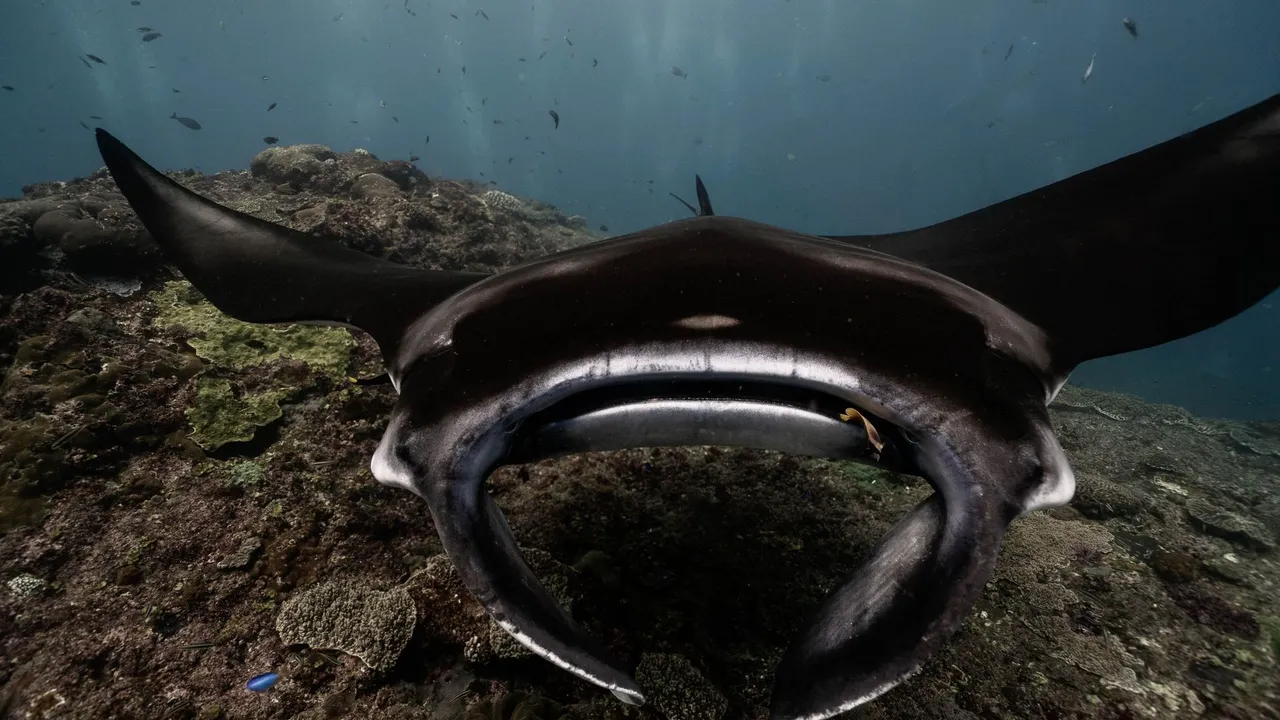
The most dependable manta encounter in Bali. Manta Point is a cleaning station where reef mantas circle to be groomed, and it is an open-water-level dive in terms of depth — but it sits on an exposed stretch of coast, so the surface swell can be large and the conditions bouncy. The golden rule is simple and worth repeating: do not chase the mantas. Settle low, hold your position, and let them come to you; a calm diver on the bottom sees far more than one finning after them. Turtles and blue-spotted stingrays round out the dive.
The mola dives: Crystal Bay
Crystal Bay is, as divers here put it, the centre of the mola-mola universe. When the cold upwellings arrive from July to October, oceanic sunfish rise from the depths to be cleaned, and seeing one of these vast, disc-shaped fish is a highlight of a diving life. It is also one of Bali’s more serious dives, and it deserves respect: the site is prone to strong downcurrents, tends to be deep, and its flow can change quickly, which together give it a higher incident rate than the island’s easy sites. This is not a dive to push as a beginner. Plan on an Advanced certification as a minimum and, ideally, around 50 logged dives, and go with an operator and guide who know the site and will call it off if the conditions turn. Beyond the sunfish, expect reef sharks, eagle rays, and tuna in the blue.
The drifts: Blue Corner, SD Point and Mangrove
Blue Corner is Bali’s most legendary drift and a site experienced divers come back to on purpose. It is also genuinely demanding — downcurrents, negative-entry descents, and turbulent water mean it is for advanced drift divers only, with real drift experience and, as a rough guide, 30 to 50 dives behind you. Those who are ready for it are rewarded with mola, sharks, giant trevally, and huge schools of fish stacking up in the current. SD Point is the gentler drift by comparison — a pleasant coral slope with lovely shafts of sunlight, turtles, and reef sharks — a good choice when you want the drift experience without Blue Corner’s intensity. Mangrove, off Nusa Lembongan, is the relaxed one: a sunlit drift over colourful coral where you barely need to kick, with big fish schools and the occasional sea snake.
Marine life
Nusa Penida offers a bigger, bluer cast than the rest of Bali. Mantas are the year-round constant at their cleaning stations, and the seasonal mola mola is the trophy. Around them the current-swept sites hold reef sharks, eagle rays, tuna, and giant trevally, while the drifts add turtles, sea snakes, and dense schooling fish. It is pelagic, open-water diving in character — a contrast to the muck and reefs of Tulamben across the island.
Currents, conditions and who it suits
This is the section to read before you book. Nusa Penida’s magic — the mantas, the mola, the adrenaline drifts — comes from the same cold, fast, tidal water that makes it demanding. Manta Point is accessible to open-water divers but can be surgy at the surface. Crystal Bay and Blue Corner are a clear level up: strong downcurrents, negative entries, and quickly shifting flow put them firmly in advanced territory, and Crystal Bay’s reputation for incidents is earned rather than exaggerated. Match the site to your certification honestly, choose an operator who does the same, and dive the briefing rather than your ambitions. And remember the cold — in mola season the temperature drop is real, so bring the exposure protection to stay comfortable and alert.
Getting there
Fast boats run from Sanur on mainland Bali and take roughly 30 to 45 minutes to reach the Nusa islands. You can dive as a day trip from Bali or stay on Nusa Lembongan or Nusa Penida itself; the two islands are adjacent and usually dived together, so basing on either puts every site within reach.
Shooting Nusa Penida
Mantas gliding through blue water are a wide-angle dream, and blue water is exactly where color loss is worst — so expect your footage to need a color pass afterward. It helps to understand why underwater photos look blue and how to restore underwater photos before a trip. Action-camera divers can read our GoPro and DJI Osmo Action guides, and see recoverable results in the before-and-after gallery.
Plan your trip
For how Nusa Penida fits alongside the rest of the island — including the wrecks and macro of Tulamben — see the Indonesia diving guide and the month-by-month Southeast Asia diving calendar. The full dive destinations hub collects every guide on the site.
Field notes
Frequently asked questions
When can I see mola mola at Nusa Penida?
Is Nusa Penida suitable for beginner divers?
Where can I dive with manta rays in Bali?
How strong are the currents at Nusa Penida?
How do I get to Nusa Penida?
What is the difference between Nusa Penida and Nusa Lembongan?
Keep exploring
Continue exploring
Diving Tulamben
Bali's wreck-and-macro capital on the northeast coast — the USAT Liberty and black-sand critters.
Read moreIndonesia Diving Guide
The country overview — every Indonesian dive region and when to visit.
Read moreDiving Komodo National Park
More mantas and current-driven diving, at the other end of the Lesser Sunda islands.
Read moreBest Time to Dive in Southeast Asia
The month-by-month diving calendar for the whole region.
Read moreManta Rays: Species, Behavior and Where to Dive With Them
How mantas feed and behave, and how to dive respectfully at a cleaning station.
Read more