Dive Destinations
Diving Komodo National Park: Sites, Seasons and Marine Life
A guide to diving Komodo — the manta sites, fast drifts, when to go, the marine life, the SiORA park permit, and how to reach it from Labuan Bajo.
- Region
- Flores, Indonesia
Komodo National Park is one of the most exciting places to dive in Indonesia, and its appeal is variety within a small area. Cold, nutrient-rich water wells up from the south and feeds an extraordinary amount of life, so a single trip can take in warm coral gardens, manta cleaning stations, and adrenaline drifts past sharks — with Komodo dragons prowling the islands topside between dives. It is a national park first and a dive destination second, which shapes both the experience and the planning.
This guide covers when to dive Komodo, its signature sites, the marine life, and the park permit and logistics. For the wider country picture, see the Indonesia diving guide.
When to dive Komodo
Komodo dives well through the dry season, roughly April to November, when the weather is settled and visibility is at its best. Mantas are present year-round, so there is no closed season for the park’s headline animal. The wettest months around the turn of the year bring rougher crossings and greener water, particularly in the south, though operators keep diving. For the most reliable conditions, aim for the dry-season stretch, with the peak months of July to October the busiest.
The dive sites
Komodo splits into a warm, calm north and a cold, current-driven south, and the best trips sample both.
The manta channels
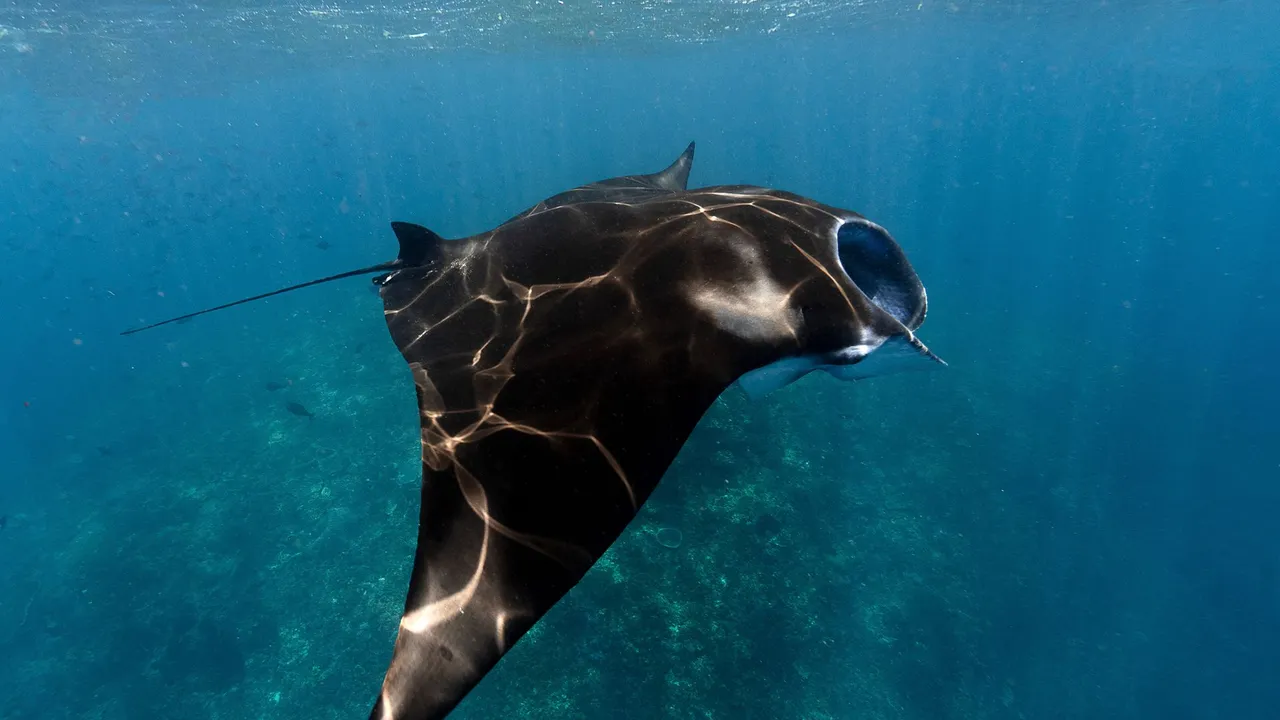
Karang Makassar, widely known as Manta Point, is a broad sandy channel where manta rays feed and visit cleaning stations, and drifting it alongside a group of mantas is the classic Komodo experience. Manta Alley in the south is another dependable aggregation.
The northern seamounts
Castle Rock and Crystal Rock are exposed pinnacles swept by current and covered in fish, with grey reef and whitetip sharks, trevally, and snapper massing in the blue. Batu Bolong, a small pinnacle between islands, is one of the most fish-dense sites in the park. These are among Komodo’s finest dives when the current runs.
The drifts
The south and the channels serve up genuine drift diving. The Cauldron, also called Shotgun, funnels divers through a bowl and out over a saddle, and several sites carry strong, sometimes tricky current — part of the appeal for experienced divers, and a reason to respect the briefings.
Marine life
Komodo delivers big-animal action and reef richness together. Mantas are the signature, seen year-round at the cleaning channels. The current-swept sites hold reef sharks, schooling fish, and pelagics, while the calmer reefs are dense with coral, turtles, and macro life. Cooler southern water occasionally brings surprises. It is a park where a week of diving rarely repeats itself.
Conditions and who it suits
Komodo has a reputation for current, and it is deserved — especially in the cooler south, where drifts and occasional down-currents demand experience and good buoyancy. The northern and central sites are far gentler and suit newer divers with a good guide. Water temperature varies noticeably, warm in the north and markedly colder on the southern upwellings, so pack appropriate exposure protection.
Permits and getting there
The gateway is Labuan Bajo on Flores, reached by air most easily via Bali. From town you dive with day-boat operators or join a liveaboard, which is the best way to reach the remote southern sites. The important 2026 change is access: walk-in park tickets are no longer available, and every visitor — divers included — must be pre-registered through the official SiORA online reservation system, usually handled by your operator, at least two to three days ahead with passport details. The park also enforces a daily visitor cap, so peak-season slots in July to October fill months in advance. The fees themselves are modest and generally bundled into your trip price; the widely reported jump to a 3.75-million-rupiah annual fee was scrapped. Book early and confirm your operator has your permit sorted.
Shooting Komodo
Between mantas and reefscapes, Komodo is a wide-angle favourite, and as everywhere water drains warm color with depth and distance, so images need correcting afterward. It is worth understanding why underwater photos look blue and how to restore underwater photos before a trip. Action-camera divers can read our GoPro and DJI Osmo Action guides, and see recoverable results in the before-and-after gallery.
Plan your trip
For how Komodo fits the wider region and its neighbouring destinations, see the Indonesia diving guide and the month-by-month Southeast Asia diving calendar. The full dive destinations hub collects every guide on the site.
Field notes
Frequently asked questions
When is the best time to dive Komodo?
Do I need a permit to dive Komodo National Park?
How much are the Komodo park fees?
Where can I see manta rays in Komodo?
What are the best dive sites in Komodo?
Is Komodo diving suitable for beginners?
How do I get to Komodo?
Keep exploring
Continue exploring
Indonesia Diving Guide
The country overview — every Indonesian dive region and when to visit.
Read moreDiving Raja Ampat
The richest reefs on Earth, in the far northwest of the country.
Read moreDiving the Lembeh Strait
The world's muck-diving capital, and the macro counterpart to Komodo's wide angle.
Read moreDiving Tulamben
Bali's wreck-and-macro capital — the USAT Liberty, Kubu, and black-sand critters.
Read moreDiving Nusa Penida
Bali's mantas, mola mola, and big drift dives.
Read moreBest Time to Dive in Southeast Asia
The month-by-month diving calendar for the whole region.
Read moreHow to Restore Underwater Photos
Every way to bring natural color back, from in-camera technique to AI.
Read more