Dive Destinations
Diving the Lembeh Strait: Muck Diving, Critters and Seasons
A guide to diving the Lembeh Strait — the world's muck-diving capital: the critters, the best sites, when to go, and how to reach it in North Sulawesi.
- Region
- North Sulawesi, Indonesia
The Lembeh Strait is not a coral-reef destination, and that is exactly the point. This narrow channel of black volcanic sand in North Sulawesi is the birthplace and the capital of muck diving — the art of hunting sandy, silty bottoms for the small, bizarre, and beautifully camouflaged creatures that live nowhere near a reef. For macro photographers and critter hunters, no place on Earth is more concentrated, and a single dive can turn up a dozen species most divers have never seen.
This guide covers what muck diving is, the critters and sites that make Lembeh famous, when to go, and how to reach it. For the wider country picture, see the Indonesia diving guide.
When to dive Lembeh
Because the strait is sheltered, Lembeh dives well all year, and the critters are there in every season — there is no closed period and no migration to time. Conditions are most settled from roughly October to May, with slightly wetter, greener spells at other times, but this is a destination you can visit almost any month and still fill a logbook. Its year-round reliability is part of why it pairs so easily with a wide-angle trip elsewhere in Indonesia.
What muck diving is
Muck diving swaps coral walls for sand, silt, and rubble, and swaps sweeping vistas for slow, close-up searching. The bottoms look barren at a glance, which is what makes them so rich: the creatures that live here survive by camouflage and mimicry, so finding them is a game of patience and sharp eyes. Dives are shallow, unhurried, and led by guides whose entire skill is spotting a stonefish that looks like a rock or an octopus that looks like sand. If reef diving is landscape photography, muck diving is macro portraiture.
The critters and sites
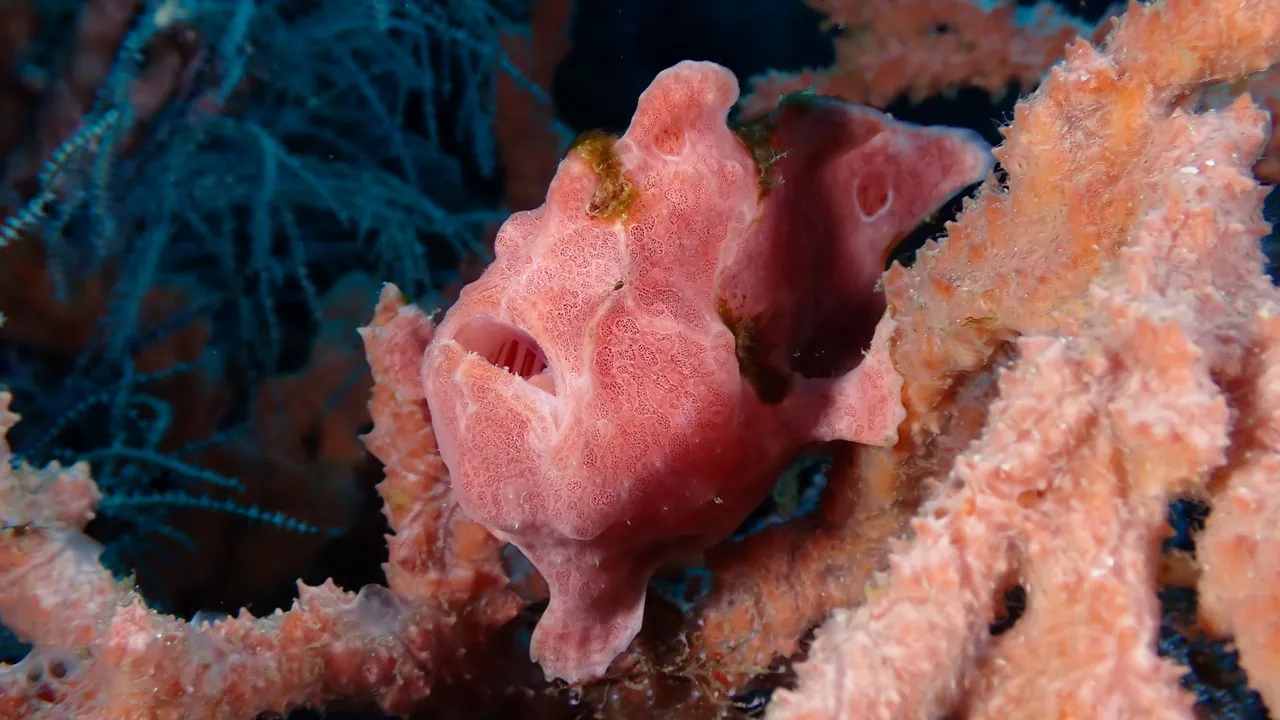
Lembeh’s fame rests on its cast of characters. Hairy frogfish, mimic and wonderpus octopus, flamboyant cuttlefish, blue-ringed octopus, ornate ghost pipefish, and a rotating roll-call of nudibranchs are the headliners, alongside pygmy seahorses and, on dusk dives, mandarinfish. Classic sites read like a critter directory — Hairball, Nudi Falls, Aer Prang, and the TK sites among them — each known for particular residents. Guides track what has been seen where, so telling them your wish list before a dive is worth doing.
Marine life beyond the muck
While the muck is the draw, the strait is not only sand. There are coral slopes and reef patches for a change of pace, and North Sulawesi’s wider region adds real variety: Bunaken National Park, a short trip from Manado, is famous for steep wall diving. A trip based around Lembeh can therefore combine its unmatched macro with some classic reef and wall diving nearby.
Conditions and who it suits
Lembeh is among the more relaxed places to dive in Indonesia. The sites are shallow and sheltered, current is usually mild, and there is no demanding drift work, which makes it comfortable for newer divers. The challenge is not the diving but the seeing — success comes down to a good guide and slowing right down. Water is warm year-round, and because dives are shallow and long, it suits divers who like to linger over a single subject.
Getting there
The gateway is Manado in North Sulawesi, reached by air via Jakarta or Singapore. From the airport it is a road transfer and a short boat crossing to a resort on or across the strait, near the port town of Bitung. Almost everyone stays at a dedicated dive resort and dives from the resort’s boats, since the sites line the strait a few minutes away. There are no special permits to worry about, which keeps the logistics simple.
Shooting Lembeh
Lembeh is a macro photographer’s destination above all, and the usual color rule still applies — even close-up, water shifts color, so shots benefit from correction afterward. It is worth understanding why underwater photos look blue and choosing the right underwater photo editor for the edit. If you shoot macro on a compact or action camera, our camera guides cover the gear, and you can see the kind of color that comes back in the before-and-after gallery.
Plan your trip
For how Lembeh fits the wider region and its neighbouring destinations, see the Indonesia diving guide and the month-by-month Southeast Asia diving calendar. The full dive destinations hub collects every guide on the site.
Field notes
Frequently asked questions
When is the best time to dive Lembeh?
What is muck diving?
What can I see diving Lembeh?
Is Lembeh good for beginners?
Do I need a camera for Lembeh?
Is Lembeh only muck diving?
How do I get to Lembeh?
Keep exploring
Continue exploring
Indonesia Diving Guide
The country overview — every Indonesian dive region and when to visit.
Read moreDiving Raja Ampat
The richest reefs on Earth, and the wide-angle counterpart to Lembeh's macro.
Read moreDiving Komodo National Park
Manta trains and fast drifts in the park to the south.
Read moreDiving Tulamben
Bali's wreck-and-macro capital — the USAT Liberty, Kubu, and black-sand critters.
Read moreDiving Nusa Penida
Bali's mantas, mola mola, and big drift dives.
Read moreBest Time to Dive in Southeast Asia
The month-by-month diving calendar for the whole region.
Read moreBest Underwater Photo Editor
Compare Lightroom, Photoshop, Capture One, and AI editors for underwater work.
Read more