Dive Destinations
Diving Raja Ampat: Sites, Seasons and Marine Life
A guide to diving Raja Ampat — the best dive sites, when to go, the marine life, entry permits, and how to reach the richest reefs on Earth.
- Region
- West Papua, Indonesia
If there is a single reason divers cross the world to Indonesia, it is Raja Ampat. This scatter of islands off the northwest tip of West Papua sits at the very heart of the Coral Triangle, and it holds the richest marine biodiversity measured anywhere — reefs so dense with fish and coral that a single dive can feel overstocked. It is remote and it takes effort to reach, but for wide-angle reef diving it has few equals.
This guide covers when to dive Raja Ampat, the main regions and their signature sites, the marine life, and the permits and logistics that shape a trip. For the wider country picture, see the Indonesia diving guide.
When to dive Raja Ampat
The season runs from roughly October to April, the drier northwest-monsoon window, when the seas are calmest and visibility often reaches 25 to 30 metres. Within that, the manta aggregations peak from December to March, which is the busiest and most rewarding stretch. July and August bring the rough off-season, with wind and swell that make crossings uncomfortable, though the northern and more sheltered sites stay diveable. If mantas and glassy water are the goal, aim for the December-to-March core.
The dive regions and sites
Raja Ampat is really several dive areas in one, each reached differently.
The Dampier Strait
The central hub and the easiest to reach, home to the best-known sites and a growing cluster of land-based resorts. Cape Kri holds one of the highest fish counts ever recorded on a single dive; Blue Magic and Sardine Reef are current-swept cleaning stations that pull in mantas, sharks, and dense schools; and Manta Sandy is the reliable manta cleaning station. Most first trips are built around the strait.
Misool
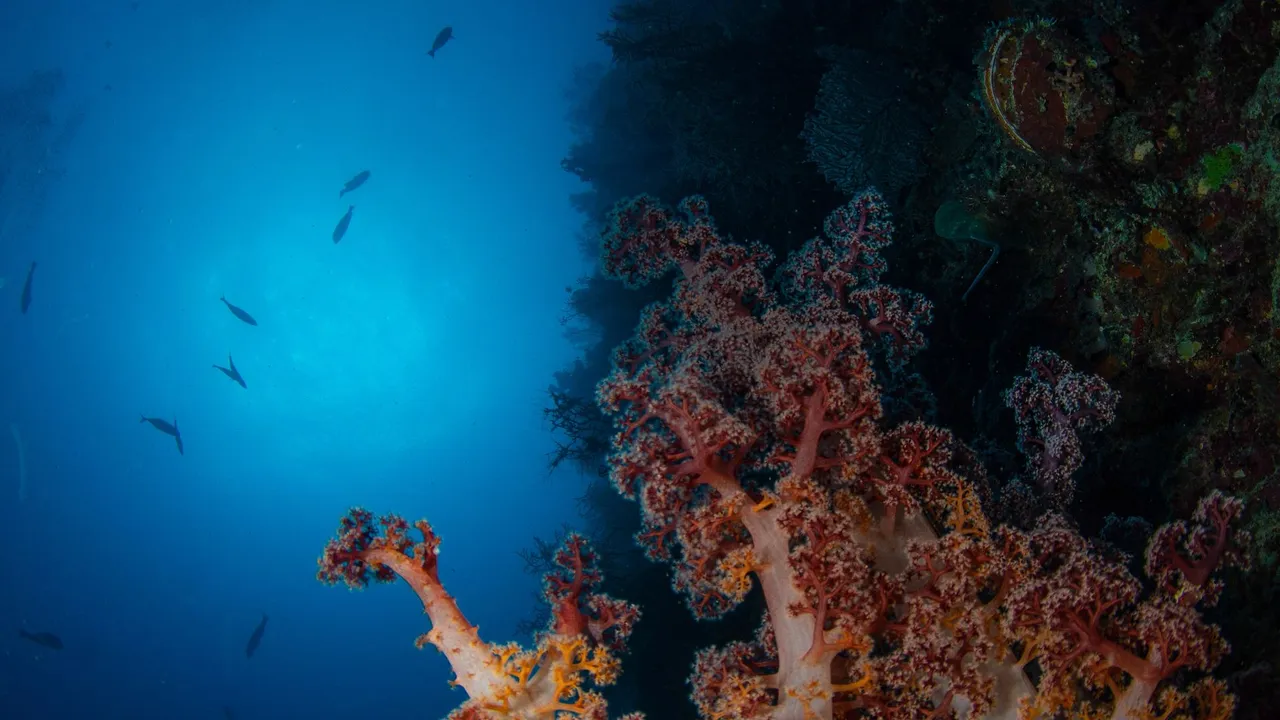
Far to the south, remote and usually dived by liveaboard, Misool is many divers’ favourite for its soft-coral walls and dramatic seascapes. Boo Windows, Fiabacet, and Nudi Rock are covered in colour, with resident sharks and huge schools. It is a highlight of the archipelago and worth the extra travel.
The north
The northern reaches around Wayag and Kawe are best known topside for their iconic karst-island lagoons, but the diving here — reef sharks, mantas, and untouched coral — rewards the few liveaboards that make the long run north.
Marine life
Raja Ampat’s draw is breadth and density rather than a single headline animal. Manta rays gather at the cleaning stations, reef sharks patrol the drop-offs, and wobbegong sharks lie camouflaged under ledges. The reefs teem with schooling fusiliers, snappers, and barracuda, while the macro is excellent too — pygmy seahorses, nudibranchs, and critters tuck into the coral. Above all it is the sheer coral health and fish volume that stay with divers.
Conditions and who it suits
The same currents that feed all that life make Raja Ampat a place that rewards experience. Many signature sites are dived on moving water, drifting past cleaning stations and pinnacles, so solid buoyancy and comfort with current matter. It is not off-limits to newer divers — there are gentle reefs, and guides pick sites to suit the group — but an Advanced certification and some logged dives will open up the best of it. Water is warm year-round.
Permits and getting there
Reaching Raja Ampat means flying to Sorong, usually via Jakarta, Makassar, or Manado, then taking a ferry or speedboat to the gateway town of Waisai, or boarding a liveaboard directly. Everyone pays two fees: a Marine Park Entry Permit, around 700,000 rupiah for international visitors and valid for twelve months, and a separate Visitor Entry Ticket of about 300,000 rupiah. You can pay both online in advance or on arrival in Waisai; bring cash in rupiah, as ATMs are scarce beyond the town, and keep your tag, since patrols check it. A Surat Jalan travel letter is no longer required for recreational divers.
Shooting Raja Ampat
Raja Ampat is a wide-angle photographer’s dream, and the same rule applies as everywhere: water strips warm color fast with depth and distance, so images need a color pass afterward. It helps to understand why underwater photos look blue and how to restore underwater photos before a trip. If you shoot an action camera, our GoPro and DJI Osmo Action guides cover those rigs, and you can see the kind of color that comes back in the before-and-after gallery.
Plan your trip
For how Raja Ampat fits the wider region and its neighbouring destinations, see the Indonesia diving guide and the month-by-month Southeast Asia diving calendar. The full dive destinations hub collects every guide on the site.
Field notes
Frequently asked questions
When is the best time to dive Raja Ampat?
Do I need a permit to dive Raja Ampat?
What are the best dive sites in Raja Ampat?
Is Raja Ampat good for beginner divers?
Should I dive Raja Ampat by liveaboard or from a resort?
What will I see diving Raja Ampat?
How do I get to Raja Ampat?
Keep exploring
Continue exploring
Indonesia Diving Guide
The country overview — every Indonesian dive region and when to visit.
Read moreDiving Komodo National Park
Manta trains, fast drifts, and Komodo dragons in the park to the south.
Read moreDiving the Lembeh Strait
The world's muck-diving capital, and the macro complement to Raja Ampat's wide angle.
Read moreDiving Tulamben
Bali's wreck-and-macro capital — the USAT Liberty, Kubu, and black-sand critters.
Read moreDiving Nusa Penida
Bali's mantas, mola mola, and big drift dives.
Read moreBest Time to Dive in Southeast Asia
The month-by-month diving calendar for the whole region.
Read moreWhy Underwater Photos Look Blue
The science behind the blue-green cast, and why water steals warm color.
Read more