Dive Destinations
Diving Tulamben, Bali: Wrecks, Macro and the USAT Liberty
A guide to diving Tulamben on Bali — the USAT Liberty and Kubu wrecks, black-sand macro, when to go, the marine life, and how to dive it all from shore.
- Region
- Bali, Indonesia
Tulamben is the diving that makes Bali more than a stopover. A single black-sand bay on the island’s quiet northeast coast holds a whole shipwreck you can walk to, a second, quieter wreck a short way along, some of the best muck diving on the island, and easy coral reefs that even snorkelers enjoy — all within a few minutes of one another and almost all reached from shore. It is the rare destination that suits a first-time diver on their fourth dive and a macro obsessive on their four-hundredth.
This guide covers when to dive Tulamben, its main sites, the marine life, and the logistics of shore diving there. For the wider country picture, see the Indonesia diving guide, and for how Bali fits the region’s seasons, the Southeast Asia diving calendar.
When to dive Tulamben
Tulamben is a year-round destination, which is part of why it is so popular. The dry season, roughly April to November, brings the calmest surface and the clearest water, and it overlaps neatly with the best diving across southern Bali. The wettest stretch around December and January can lower visibility and put some chop on the entry, but the sites sit in a sheltered bay and operators keep diving through the year. Water is warm throughout, generally 27 to 30°C, so exposure protection is a comfort choice rather than a seasonal necessity.
The dive sites
Everything at Tulamben is close together, so a two- or three-day trip can cover the lot. The table is a quick index; the sections below fill in the character of each.
| Dive site | Level | Water temp | Visibility | Highlights |
|---|---|---|---|---|
| USAT Liberty | Open Water | 27–30°C | 10–30 m | Bali’s classic shore-dive wreck; jackfish schools, bumphead parrotfish, turtles |
| Kubu Wreck | Advanced recommended | 27–29°C | 15–30 m | A newer, quieter wreck with two-level penetration; a photographer’s favourite |
| Drop Off | Open Water+ | 27–29°C | 15–30 m | Tulamben’s prettiest wall — sea fans, soft coral, reef sharks, turtles |
| Seraya Secrets | Open Water | 27–30°C | 5–15 m | The macro highlight; blue-ringed and mimic octopus, frogfish, nudibranchs |
| Coral Garden | Open Water / snorkel | 27–30°C | 15–25 m | The gentlest site; clownfish, turtles, easy shallow coral |
| Emerald (Teluk Emerald) | Open Water+ | 27–29°C | 20–35 m | Boat-access bay with clear water and healthy coral; reef sharks, fusiliers |
The wrecks
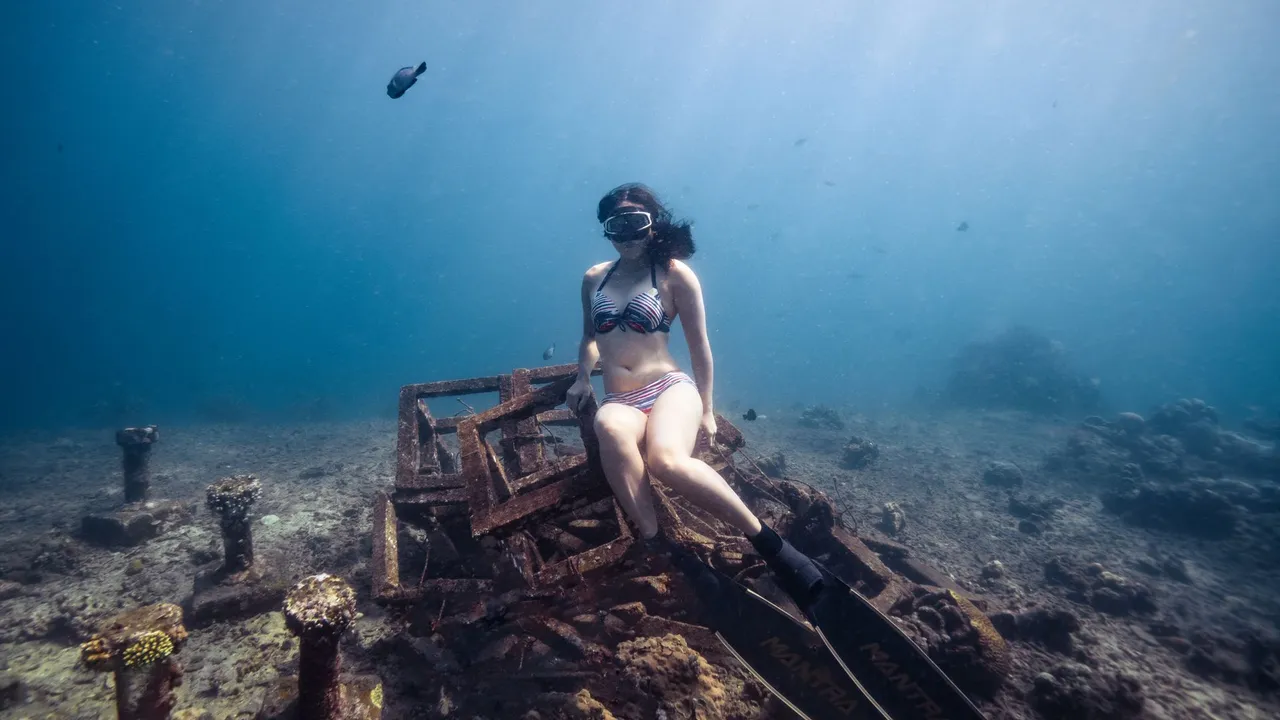
The USAT Liberty is the reason most divers come. A US Army cargo ship torpedoed in 1942 and later pushed off the beach by a volcanic eruption, it now lies on a slope from roughly 5 to 30 metres, close enough that you swim to it in a couple of minutes. It is a whole wreck rather than a cluster of debris, thickly encrusted with coral and patrolled by a resident school of jackfish that swirls into a slow tornado, plus bumphead parrotfish, sea turtles, and moray eels. It stays shallow enough for open-water divers and is dived as a straightforward swim-over — no penetration required.
A short way along the coast, Kubu Wreck is the quieter alternative and a favourite of photographers. Newer and far less busy than the Liberty, it allows a two-level penetration and photographs beautifully, with the empty, coral-draped structure lending itself to moody, lonely-wreck images. It is best enjoyed with an advanced certification and a few more dives under your belt — a dozen or more — for comfort in and around the structure.
The macro
Seraya Secrets is Bali’s macro ceiling. The black-sand slope looks unremarkable at a glance, which is exactly the point — it is dense with hidden life, and the site rewards divers who slow down and look closely, growing more addictive the more you dive it. It is where Tulamben turns up its rarities: blue-ringed and mimic octopus, frogfish, a rotating cast of nudibranchs, and all manner of shrimp and crabs. The blue-ringed octopus is small and beautiful and carries a serious venom, so this is a look-don’t-touch site — keep your hands and gauges off the sand and let your guide point out the finds.
The reefs and walls
Drop Off is Tulamben’s prettiest wall dive, dropping into blue water dressed in sea fans and soft coral, with small reef sharks, turtles, and reef fish along it. Coral Garden is the gentlest site in the bay — shallow, calm, and colourful enough that snorkelers get value from it — and a good spot for clownfish and turtles. Emerald, or Teluk Emerald, is the one site that needs a boat and usually an extra fee; it is rarely mentioned, but the water clarity is excellent and it runs over a large stretch of healthy coral, with reef sharks and clouds of fusiliers.
Marine life
Tulamben packs a lot of variety into a small area. The wrecks draw the crowd-pleasers — schooling jackfish, bumphead parrotfish, moray eels, and turtles — while the black sand hides the macro treasures that make Seraya Secrets special. Reef sharks patrol the wall and Emerald, turtles are common across the bay, and the coral cover on the Liberty is a reef in its own right. It is a place where a single day can swing from a coral-covered shipwreck to a thumbnail-sized octopus on open sand.
Conditions and who it suits
The diving itself is easy — warm, sheltered, and mostly shallow, which is why Tulamben is such a good place to learn or to build confidence. The real challenge is unique to the site: the entries. Most dives begin with a walk over a steep bank of black volcanic sand and cobbles, in full kit, and that short trek is the tiring part of the day; local porters famously carry tanks on their heads to spare divers the worst of it. Beyond that, open-water divers are comfortable on the Liberty and Coral Garden, while Kubu’s penetration and the deeper walls reward a little more experience.
Getting there
Tulamben sits on Bali’s northeast coast. It is roughly a two-and-a-half to three-hour drive from Denpasar airport and the southern resort strip, or about ninety minutes from Ubud, so many divers stay in Tulamben itself or in neighbouring Amed rather than day-tripping. Everything is shore-based — no liveaboard, and no long boat rides except the short hop to Emerald.
Shooting Tulamben
Between the wrecks and the black-sand macro, Tulamben is one of Bali’s most photogenic sites — and, as everywhere underwater, water drains warm color with depth and distance, so images need correcting afterward. It is worth understanding why underwater photos look blue and how to restore underwater photos before a trip. Action-camera divers can read our GoPro and DJI Osmo Action guides, and see the kind of color that is recoverable in the before-and-after gallery.
Plan your trip
For how Tulamben fits alongside the rest of the island — including the mantas and mola of Nusa Penida — see the Indonesia diving guide and the month-by-month Southeast Asia diving calendar. The full dive destinations hub collects every guide on the site.
Field notes
Frequently asked questions
When is the best time to dive Tulamben?
Can beginners dive the USAT Liberty?
Do you need a boat to dive Tulamben?
What is there to see at Tulamben besides the wreck?
How do I get to Tulamben from the airport?
Is Tulamben good for underwater photography?
Keep exploring
Continue exploring
Diving Nusa Penida
Bali's other headline destination — reliable mantas, mola mola, and the big drift dives.
Read moreIndonesia Diving Guide
The country overview — every Indonesian dive region and when to visit.
Read moreDiving the Lembeh Strait
The world's muck-diving capital, if Tulamben's black sand leaves you wanting more macro.
Read moreBest Time to Dive in Southeast Asia
The month-by-month diving calendar for the whole region.
Read moreHow to Restore Underwater Photos
Every way to bring natural color back, from in-camera technique to AI.
Read more