Marine Life
Manta Rays: Species, Behavior and Where to Dive With Them
A diver's guide to manta rays — the reef and oceanic species, how they feed and behave, the best places to dive with them, photography tips, and conservation.
- Scientific name
- Mobula alfredi & M. birostris
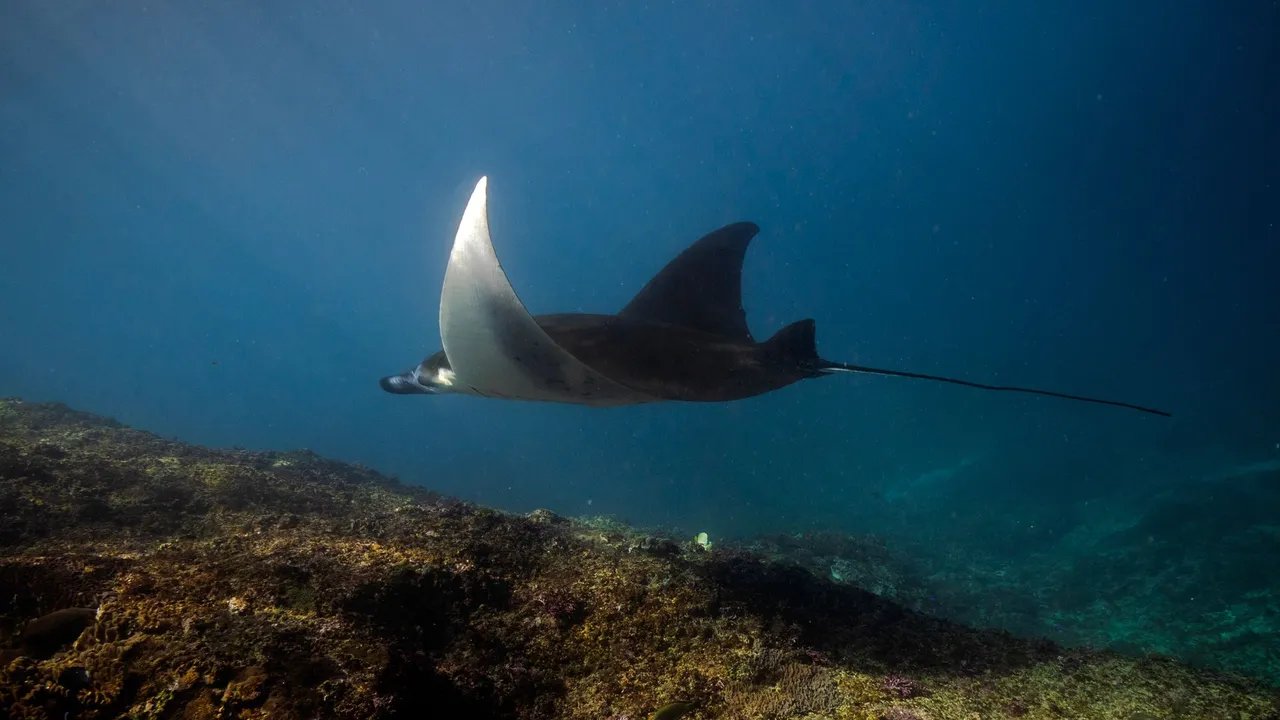
A manta ray passing overhead is one of diving’s great experiences — a creature the size of a small aircraft, gliding on wingbeats so slow it seems to hang in the water. Mantas are gentle, curious, and, at the right sites, reliably encountered, which has made them a bucket-list animal for divers worldwide. Here is what they are, how they live, and where to find them.
The species
For decades mantas were thought to be a single species. In 2009 they were split into two: the reef manta (Mobula alfredi) and the larger oceanic, or giant, manta (Mobula birostris). In July 2025 a third was formally described — the Atlantic manta (Mobula yarae) of the western Atlantic, previously known informally as the Caribbean manta. The reef manta is the one most divers meet, since it favours coastal reefs, cleaning stations, and feeding sites, while the oceanic manta spends more of its life in open water and is encountered less often.
Size and feeding
Reef mantas reach a wingspan of about 5 metres, among the largest of all rays, and the oceanic manta is larger again, sometimes exceeding 7 metres. For all that size, they are harmless: mantas are filter feeders that eat only zooplankton, cruising through plankton-rich water with their mouths open, guiding food in with the two paddle-like cephalic fins on either side of the head and straining it through their gill plates. Because they follow the plankton, mantas gather where currents and upwellings concentrate it — which is exactly why feeding aggregations form in the same places at the same times of year.
Cleaning stations and behaviour
The other place mantas reliably appear is a cleaning station: a spot on the reef where small fish pick parasites and dead skin from larger animals. Mantas visit these stations again and again, hovering almost motionless in the current while a crew of wrasse works them over, and they will circle a station for long stretches. For divers this is gold — a manta being cleaned is calm and predictable, and settling quietly near a station is the best way to spend time with one. Mantas are also genuinely curious and can be strikingly interactive with still, calm divers, which is not something you can say of most large marine animals.
Where to dive with manta rays
Indonesia is among the best places in the world for mantas. In Komodo, the sandy channel of Karang Makassar — Manta Point — and Manta Alley in the south are dependable, with mantas present year-round. In Raja Ampat, cleaning stations draw them in, peaking in the aggregations of December to March. Nusa Penida off Bali has a resident population visible all year. Beyond Southeast Asia, the Maldives and Mexico’s Revillagigedo Islands are world-famous manta destinations. The Southeast Asia diving calendar lays out the seasons.
Photographing manta rays
Mantas reward patience over pursuit. At a cleaning station, settle low and still off to the side and let the manta include you in its circuit — chasing only pushes it away. Shooting upward, with the manta between you and the surface, gives the clean silhouette and light that define the best manta shots. They are large, so a wide lens and getting close both help. As always, water drains warm color with depth and distance, so images need correcting afterward; our guides on why underwater photos look blue and how to restore underwater photos explain how, the camera guides cover the gear, and the before-and-after gallery shows the results.
Conservation
Mantas are in trouble, and it is worth understanding why. The reef manta is listed as Vulnerable on the IUCN Red List, and the oceanic manta was uplisted to Endangered. The main driver is the trade in mobula gill plates, sold for traditional medicine despite no proven benefit, which has fuelled targeted fisheries across parts of the world. Mantas are especially exposed because they reproduce extraordinarily slowly — an individual may bear only a handful of pups in its whole life — so populations recover very slowly from losses. Both species are listed on CITES Appendix II to regulate trade. For divers, supporting well-run, non-intrusive manta tourism is one of the most direct ways the animals are worth more alive than fished.
Plan a trip
To dive with mantas, start with Komodo or Raja Ampat, and use the Southeast Asia diving calendar to time it. For more on the animals you will meet, browse the other marine life guides and the rest of OceanDimana.
Field notes
Frequently asked questions
How many species of manta ray are there?
How big do manta rays get?
What do manta rays eat?
Where is the best diving with manta rays?
Are manta rays dangerous?
What is a manta cleaning station?
Are manta rays endangered?
Keep exploring
Continue exploring
Diving Komodo National Park
Manta trains at Karang Makassar and fast drifts in one of Indonesia's best parks.
Read moreDiving Raja Ampat
Manta cleaning stations and the richest reefs on Earth, peaking December to March.
Read moreSea Turtles
The reef's most-loved reptiles — species, behavior, and where to see them.
Read moreHow to Restore Underwater Photos
Every way to bring natural color back, from in-camera technique to AI.
Read more