Dive Destinations
Diving Sipadan: Permits, Sites, Seasons and Marine Life
A guide to diving Sipadan — the permit system, best dive sites like Barracuda Point, when to go, the turtles and sharks, and how to plan a trip from Mabul.
- Region
- Sabah, Malaysia
Sipadan is Malaysia’s most famous dive site and one of the best in the world. It is the country’s only true oceanic island — an extinct volcanic cone rising some 600 metres straight from the seabed off the coast of Sabah, in Malaysian Borneo — and that dramatic underwater topography concentrates marine life to an almost overwhelming degree. Turtles are everywhere, barracuda swirl in tornadoes, and sharks patrol the wall. It is also strictly protected, which means diving it takes planning.
This guide covers the all-important permit system, the best sites, when to go, the marine life, and how to base a trip. For the wider country picture, see the Malaysia diving guide.
When to dive Sipadan
Sipadan sits in the sheltered Celebes Sea and dives well all year, with the calmest and clearest conditions from March to October. There is one fixed constraint: the island closes for the entire month of November each year to let the reef recover, reopening on 1 December. During that month the surrounding islands stay fully open, so a November trip still dives — just not Sipadan itself. For the best combination of conditions and permit availability, the shoulder months either side of the summer peak are a sweet spot.
The permit system
This is the single most important thing to understand before booking, because you cannot simply turn up and dive Sipadan. Access is controlled by Sabah Parks through a limited daily quota — on the order of a couple hundred permits a day — and those permits go only to licensed dive operators, never to individuals. You secure one by booking a dive package with a resort or operator on Mabul, Kapalai, or in Semporna, and each operator distributes its small allocation among guests, almost always by a rotation that rewards longer stays.
The practical consequences shape the whole trip. Book at least three nights, ideally four or five, since diving is not done on arrival or departure day and more nights mean more chances at a Sipadan day. Book early — six to twelve months ahead for the peak months of April to August. And you will need an Advanced Open Water certification or equivalent, a requirement since October 2022 that operators check at registration.
The dive sites
Sipadan is a small island ringed by world-class sites, all sharing the same steep, life-covered wall.
Barracuda Point is the headliner, named for the resident school of chevron barracuda that gathers into a slow, swirling tornado, with grey reef sharks cruising the drop-off below. Turtle Cavern is a cave in the wall where turtle remains have accumulated over the years — a striking, if sombre, site for experienced divers. South Point, Coral Garden, Hanging Gardens, and the Drop Off complete the circuit, each a variation on the theme of turtles, sharks, schooling fish, and a wall that falls away into blue.
Marine life
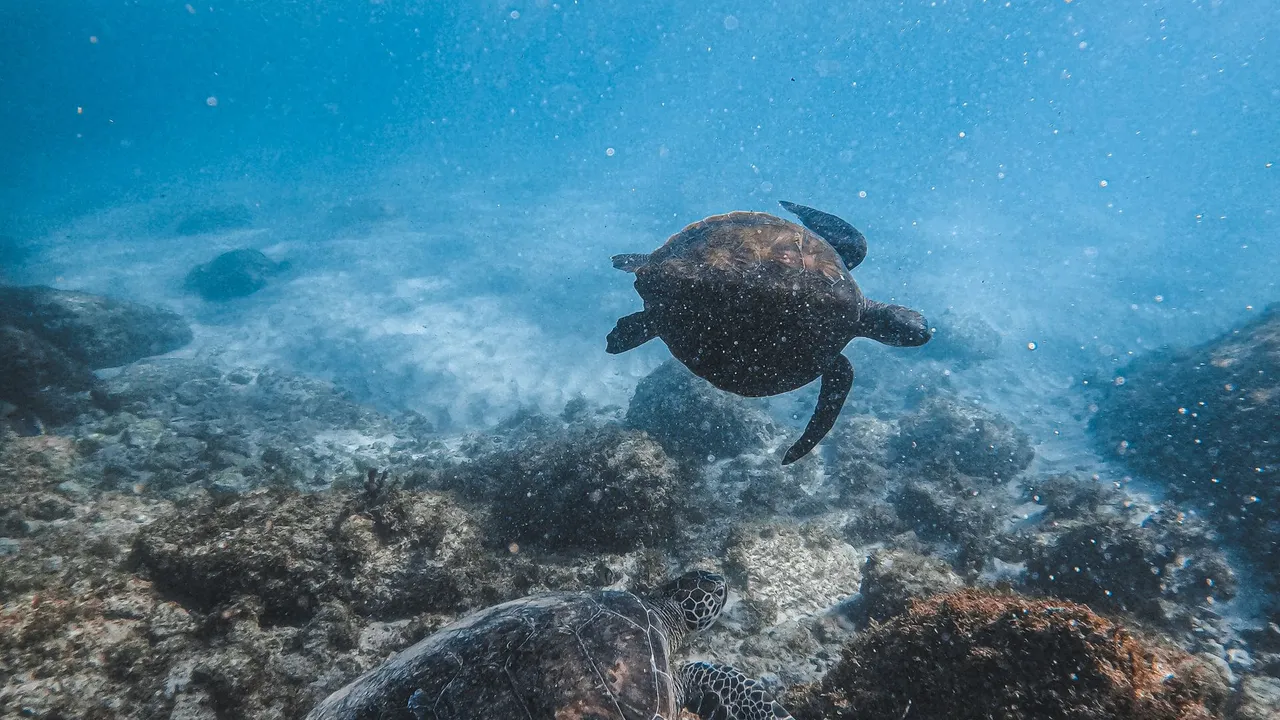
The volume of life at Sipadan is its calling card. Green and hawksbill turtles are so common that divers stop counting; the barracuda and big-eye trevally form dense, swirling schools; and grey reef and whitetip sharks are a constant on the wall, with hammerheads and threshers appearing off the deep drop-off from time to time. The oceanic setting is what does it — the island’s sheer wall meets open water, funnelling nutrients and pelagic life onto a tiny reef.
Where to stay and how to base a trip
Nobody stays on Sipadan itself; accommodation was removed years ago for conservation, and all diving is done as day trips from elsewhere. Divers base on nearby Mabul or Kapalai, or in the mainland town of Semporna, and boat out to Sipadan on their permitted days. That is no hardship — Mabul and Kapalai are among the best muck-diving destinations in the region, turning up mandarinfish, flamboyant cuttlefish, frogfish, and blue-ringed octopus, so the non-Sipadan days are excellent in their own right. Most trips reach the area by flying to Tawau in Sabah and transferring to Semporna.
Shooting Sipadan
Between the turtles, sharks, and barracuda tornado, Sipadan is a wide-angle dream, and as everywhere water strips warm color with depth and distance, so images need a color pass afterward. It is worth understanding why underwater photos look blue and how to restore underwater photos before a trip. Action-camera divers can read our GoPro and DJI Osmo Action guides, and see the kind of color that comes back in the before-and-after gallery.
Plan your trip
For how Sipadan fits the wider region and Malaysia’s other diving, see the Malaysia diving guide and the month-by-month Southeast Asia diving calendar. The full dive destinations hub collects every guide on the site.
Field notes
Frequently asked questions
When is the best time to dive Sipadan?
How do I get a Sipadan diving permit?
Do I need an Advanced certification to dive Sipadan?
What are the best dive sites at Sipadan?
How many days should I stay to dive Sipadan?
What will I see diving Sipadan?
Where do I stay to dive Sipadan?
Keep exploring
Continue exploring
Malaysia Diving Guide
The country overview — both of Malaysia's dive coasts and the permit system explained.
Read moreDiving Raja Ampat
Another world-class Coral Triangle destination, in eastern Indonesia.
Read moreBest Time to Dive in Southeast Asia
The month-by-month diving calendar for the whole region.
Read moreWhy Underwater Photos Look Blue
The science behind the blue-green cast, and why water steals warm color.
Read moreHow to Restore Underwater Photos
Every way to bring natural color back, from in-camera technique to AI.
Read more