Highlights
World Diving Calendar: Best Time to Dive, Region by Region
When to dive the world beyond Southeast Asia — Japan, the Indian Ocean, the Pacific, the Americas, and the Red Sea, with seasons, difficulty, and the big-animal highlights.
- Region
- Worldwide
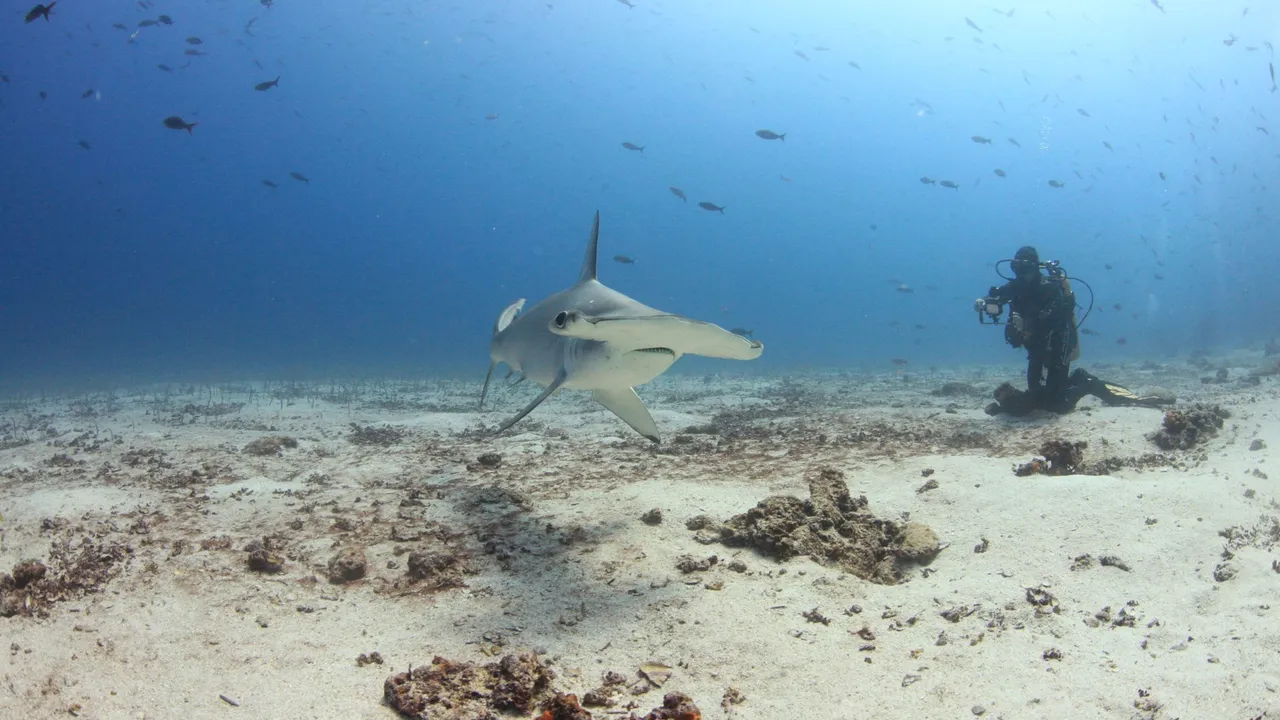
Southeast Asia is where a great deal of the world’s easy, biodiverse diving is — but it is not the whole map. Beyond it lie the trips people plan a lifetime around: schooling hammerheads in the eastern Pacific, whale sharks and mantas in the Indian Ocean, great whites and whales off the Americas, and the wreck-and-reef liveaboards of the Red Sea. This is the wider calendar, region by region — where to go, when, and what you are going for.
It is the companion to our detailed Southeast Asia diving calendar; for Indonesia, Malaysia, the Philippines, Thailand, and Brunei, start there. And a word of caution that matters even more at this scale: these windows are indicative, drawn from a season overview, so conditions, marine-life timing, and — increasingly — access rules and protected-area regulations change from year to year. Confirm the current picture with a local operator before you book anything.
Asia beyond Southeast Asia
Two of Asia’s best add-ons sit just north and east of the tropics. Japan offers warm-water reefs in the Okinawan islands and, remarkably, a winter hammerhead run in the far south; Vietnam is easy, affordable reef diving.
| Destination | Best season | Difficulty | Highlights |
|---|---|---|---|
| Japan — Okinawa | Apr–Dec | Beginner | Warm reefs and turtles, with mantas at Ishigaki’s Manta Scramble |
| Japan — Yonaguni | Jan–Mar | Intermediate | Winter schooling hammerheads and the famous underwater rock formation |
| Vietnam — Nha Trang | Feb–Oct | Beginner | Easy, affordable reef diving and a good place to learn |
The Indian Ocean
The Indian Ocean is manta-and-whale-shark country, with the Maldives its liveaboard heart and Sri Lanka a whale-watching add-on.
| Destination | Best season | Difficulty | Highlights |
|---|---|---|---|
| Maldives | Dec–Apr | Intermediate | Mantas, whale sharks, and reef sharks; liveaboard heaven. The May–Nov wet season (peaking Jul–Oct) brings the manta and whale-shark aggregation to Hanifaru Bay |
| Sri Lanka — Mirissa | Nov–Apr | Beginner–Intermediate | Seasonal whale watching — Sri Lanka is renowned for blue whales — plus south-coast reefs |
| Sri Lanka — Trincomalee | May–Sep | Beginner–Intermediate | East-coast reefs and whales when the season flips to the other side of the island |
The Pacific
The Pacific spreads from Fiji’s soft corals to Tonga’s whales and Palau’s sharks and wrecks — much of it remote, much of it world-class.
| Destination | Best season | Difficulty | Highlights |
|---|---|---|---|
| Fiji | Apr–Oct | Intermediate | The soft-coral capital; best visibility Jul–Dec, with shark dives at Beqa Lagoon |
| Tonga | Jul–Oct | Snorkel / freedive | Swimming with humpback whales — on snorkel, not scuba |
| Palau | Nov–Apr | Intermediate | Sharks, mantas (peak Feb–Apr), and WWII wrecks; Jellyfish Lake’s swarms are at a historic low as of 2025; wettest Jul–Oct |
| Saipan | May–Sep | Beginner–Intermediate | The Grotto cavern dive; windy Dec–Mar |
| French Polynesia — Tahiti | Jun–Nov | Advanced | Great hammerheads Dec–Mar; humpback whales and orcas Aug–Nov |
The Americas
From Mexico’s Baja peninsula down to the Galápagos, the eastern Pacific is the planet’s premier big-animal diving; the Caribbean side trades it for sharks, walls, and warm, clear water.
| Destination | Best season | Difficulty | Highlights |
|---|---|---|---|
| Mexico — Socorro | Nov–May | Advanced | Liveaboard-only national park; giant oceanic mantas, dolphins, and sharks, with humpbacks late Jan–Mar |
| Mexico — Guadalupe | Closed | — | Great white cage diving — but Mexico banned white-shark tourism here in 2023, and the waters remain closed to divers |
| Mexico — La Paz (Baja) | Dec–Mar | Intermediate–Advanced | Sea lions year-round, with whale sharks, mobula rays, and whales in the region in season |
| Mexico — Yucatán | Year-round | Intermediate–Advanced | Bull sharks Nov–Mar, sailfish Jan–Feb, whale sharks Jun–Sep, and the cenotes |
| Costa Rica — Cocos | Jun–Nov | Advanced | A remote liveaboard national park (permit required); schooling hammerheads, whale sharks, and mantas — year-round, but Jun–Nov is peak |
| Ecuador — Galápagos | Jun–Nov | Advanced | Schooling hammerheads and whale sharks; sea lions year-round; mantas and rays Dec–Apr |
| Belize | Mar–Jun | Intermediate | The Blue Hole and the Gladden Spit snapper spawning (Apr–Jun full moons) — though whale-shark sightings there have grown unreliable; hurricane season Aug–Oct |
| Bahamas | Dec–Mar | Intermediate | Shark diving — tiger, hammerhead, bull, and oceanic whitetip — with winter whales |
| Cayman — Grand Cayman | Year-round | Intermediate | Classic walls and reefs, with hammerheads and eagle rays May–Sep |
| Cuba — Gardens of the Queen | Dec–Apr | Intermediate | A protected shark-and-grouper park; whale sharks Jul–Nov; hurricane season Jun–Nov |
The Red Sea and Middle East
Egypt’s Red Sea is one of the most accessible world-class dive destinations there is — warm, clear, and packed with reefs and wrecks.
| Destination | Best season | Difficulty | Highlights |
|---|---|---|---|
| Egypt — Red Sea | Mar–Nov | Intermediate–Advanced | Coral walls and iconic wrecks like the Thistlegorm; hammerheads in summer and oceanic whitetips in autumn on the southern reefs; cold Dec–Feb; liveaboard country |
Planning a trip
A few patterns fall out of the table. The big-animal Pacific — Cocos, the Galápagos, Socorro — peaks broadly from June to November and is almost all advanced, remote, liveaboard diving. Whale encounters cluster in each hemisphere’s winter and spring: humpbacks in Tonga and Tahiti from July to November, blue whales off Sri Lanka in its season. The Caribbean and Atlantic — Bahamas, Cuba, Belize, Cayman — dive best from roughly December to spring, before the summer-to-autumn hurricane season. And the Indian Ocean and Red Sea run on the northern-hemisphere calendar, best from late autumn through spring in the Maldives and spring through autumn in Egypt.
A note on fees and access: many of these are protected areas with significant — and rising — entry costs, so budget for them and confirm current rates when you book. The Galápagos park fee doubled to US$200 in 2024; Palau layers a roughly US$100 environmental fee on top of its Rock Islands and Jellyfish Lake permits; and Cocos, Socorro, and the Red Sea’s offshore reefs all carry park or marine-reserve fees. Rules change, too — Guadalupe’s closure to shark divers is the cautionary tale.
Wherever you are headed, the color and technique are the same everywhere: water steals warm color with depth, so read why underwater photos look blue and how to restore underwater photos before you go, and pack light with a compact like the OM System TG-7. For the region we cover in the most depth, see the Southeast Asia diving calendar, and browse everything on the dive destinations hub.
Field notes
Frequently asked questions
Where and when can I dive with schooling hammerhead sharks?
When can I swim with humpback whales?
When is the best time to dive the Maldives?
When is the best time to dive the Red Sea in Egypt?
What is the best time to dive the Galápagos?
Where can I dive with great white sharks?
Keep exploring
Continue exploring
Best Time to Dive in Southeast Asia
The detailed month-by-month companion to this page, for Indonesia, Malaysia, the Philippines, Thailand, and Brunei.
Read moreWhy Underwater Photos Look Blue
The science behind the blue-green cast, and why water steals warm color with depth.
Read moreUnderwater Macro Photography
Focus, composition, and light for the small stuff, wherever in the world you dive.
Read moreHow to Restore Underwater Photos
Every way to bring natural color back, from in-camera technique to AI.
Read moreOM System TG-7 Underwater Guide
The compact macro camera to take on your next trip, anywhere.
Read more