Camera Guides
OM System TG-7 Underwater Guide: Macro, Modes and Housing
How to shoot underwater with the OM System TG-7 — its underwater modes and white balance, macro and microscope mode, the PT-059 housing, and strobes.
- Brand
- OM System
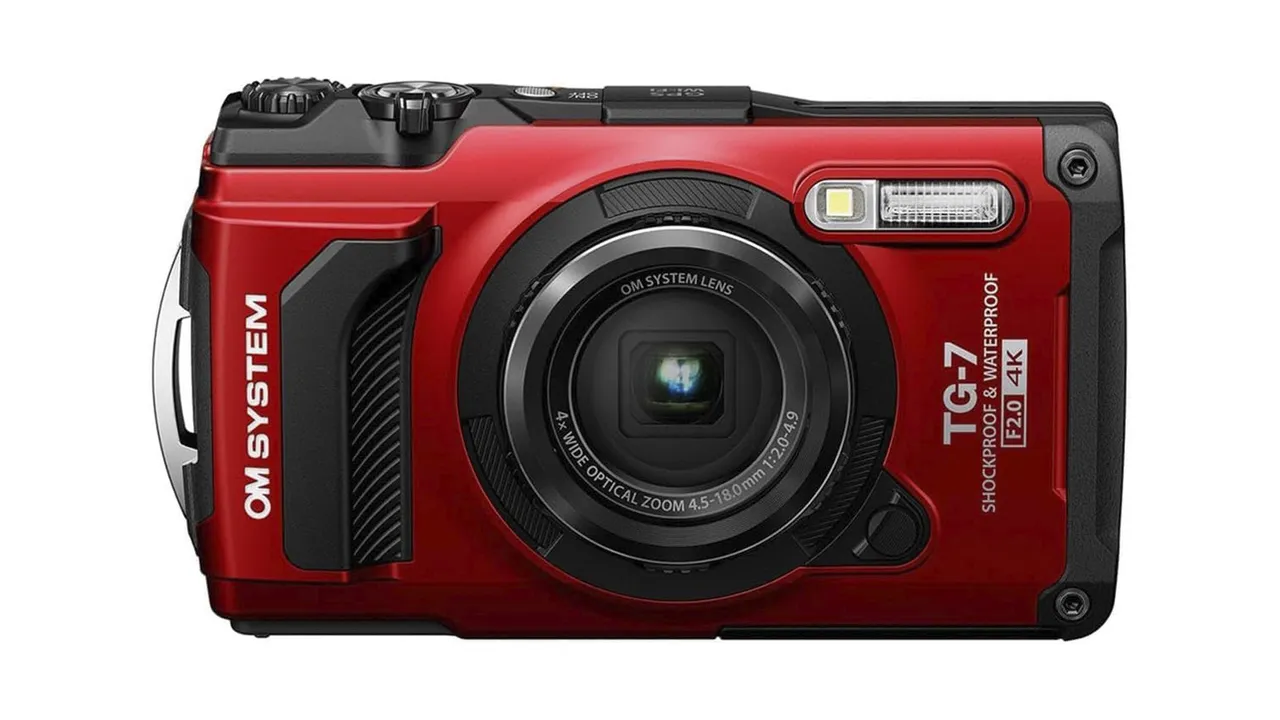
The OM System Tough TG-7 is a different kind of underwater camera from a GoPro or an Osmo Action. It is a rugged waterproof compact — the successor to the long-running Olympus TG-6 — built first and foremost for stills, and especially for macro. Where an action camera is a video tool that needs filters and lenses bolted on to cope underwater, the TG-7 arrives with dedicated underwater shooting modes, white-balance presets that restore color in-camera, RAW capture, and the ability to fire real strobes. For divers whose priority is photographs rather than footage, it is the natural first step up.
This guide covers how to get the most out of the TG-7 underwater: how deep it goes, its underwater modes and macro strengths, the PT-059 housing and strobes, and where its limits lie. For the wider science of underwater color, see why underwater photos look blue.
Why the TG-7 is different from an action camera
The gap comes down to control over color and focus. The TG-7 has five underwater shooting modes and three underwater white-balance presets (more on both below), so it can produce natural color straight out of the camera on natural light — something a GoPro simply cannot do, which is why action cameras rely on physical filters. It shoots RAW for full editing latitude. Its Microscope mode focuses to within a centimetre for genuine macro. And through its housing it can trigger external strobes, the single biggest step up in underwater image quality there is.
The catch is the sensor. The TG-7 uses a small 1/2.3-inch sensor, so its dynamic range and low-light performance sit below 1-inch compacts and mirrorless cameras. For macro, where you light the subject and depth of field is generous, that barely matters — the TG-7 punches well above its weight. For wide-angle scenes in dim water it is more of a limitation. Knowing that trade-off is the key to using it well: it is a macro star and a capable all-rounder, not a low-light wide-angle camera.
Waterproofing and the PT-059 housing
The camera itself is waterproof to 15 metres (50 feet), along with being freezeproof, crushproof, and shockproof — fine for snorkeling, rock pools, and shallow water on the bare camera. For diving, the dedicated PT-059 underwater housing is essential. It takes the TG-7 to 45 metres (147 feet), adds a hard shell against knocks, salt, and sand, gives you larger, glove-friendly controls, and — crucially — provides the mounting points for strobes, wet lenses, and a tray. The same housing fits the TG-5 and TG-6 as well. One caveat on the bare camera: 15 metres is the rating, but avoid diving it bare and then sealing it in the housing later the same trip. Water works into the body’s seams on a bare dive, and that trapped moisture will fog the port once the camera is inside the case — so pick one approach per trip, bare for snorkeling or housed for diving.
Treat the housing seal carefully: inspect and grease the O-ring per the maker’s guidance, keep the sealing surfaces free of sand and hair, close it in cool, dry air, and rinse the whole rig in fresh water after every dive.
Underwater modes and white balance
This is where the TG-7 earns its reputation. It offers five underwater modes, each tuned to a kind of shot: Underwater Snapshot for shallow scenes in good natural light; Underwater Wide for larger subjects at depth — divers, turtles, schooling fish, coral; Underwater Macro for small subjects like little fish, shrimp, and crabs; Underwater Microscope for the tiniest critters, such as nudibranchs; and Underwater HDR, which blends several frames for high-contrast scenes. The macro and microscope modes are best paired with a light. Alongside them sit three underwater white-balance presets, Shallow, Mid-Range, and Deep, which adjust automatically with the chosen mode and can also be set by hand. Together they rebuild the warm color water removes without any physical filter, so a snapshot at depth comes back looking natural rather than blue. Shoot RAW at the same time and you keep full latitude to fine-tune afterward. Matching the mode and white balance to your depth and subject is most of what good TG-7 technique involves.
Setting a custom white balance at depth
The presets are the easy route, but the TG-7’s strongest color trick on natural light is a manual, captured white balance. At your shooting depth, point the camera at something neutral — a slate, sand, or a grey reference — and use the one-touch white-balance capture to tell the camera that this is white at this depth. It rebuilds far more of the lost red than a preset, so the straight-out-of-camera image is dramatically less blue-green and needs much less work afterward. It is what turns the TG-7 from a macro specialist into a camera that also shoots colorful portraits and reef scenes in the top 10 metres, with 4–5 metres on bright natural light giving the richest color of all.
Three things to remember. Re-capture the white balance whenever your depth changes, since the color of the light shifts as you descend. The same captured setting carries over to video, not just stills. And — the counter-intuitive one — do not add a strobe or video light after setting a captured white balance, or the image floods red: the custom balance has already told the camera to add red to compensate for the depth, so a full-spectrum light on top over-corrects. Captured white balance is for natural-light shooting; when you light the subject, switch back to a neutral balance instead.
Macro and Microscope mode
Macro is the TG-7’s signature. The Variable Macro System and Microscope mode let it focus as close as one centimetre from the front of the lens, at magnifications up to around 7x, which fills the frame with subjects most cameras cannot get near — a tiny shrimp, a nudibranch’s gills, the eye of a blenny. For even more reach, a screw-on wet close-up lens on the housing pushes into supermacro territory. The technique that matters is control: at these magnifications depth of field is razor-thin, so steady positioning and precise focus make or break the shot, and a single strobe or focus light brings out color and detail.
Recommended TG-7 settings
The modes set sensible defaults, but a handful of manual settings lift your hit rate, especially for macro:
- Shoot RAW (or RAW+JPEG). It holds the most color and detail for editing, on top of whatever the underwater mode does — and clear the card before a dive so you never run out mid-water.
- Cap ISO at 100–400. The small sensor gets noisy quickly, so limit the auto-ISO range (Menu → Custom → ISO-Auto Set) and add light rather than pushing ISO.
- Turn on spot metering. It meters off your subject rather than the whole frame, keeping a lit critter correctly exposed against dark water.
- Use exposure compensation for dark backgrounds. Dial in around −2.0 EV for the classic black-background macro look, so the water behind the subject falls to black.
- Match the focus mode to the distance. Use ordinary AF beyond about 3 centimetres and AF Super Macro closer than that (on the shooting screen, press OK and choose it). Lock focus on the creature’s eye, and long-press OK to reposition the focus box.
- Keep the shutter fast — 1/160 to 1/250 — to freeze your own hand movement and the subject; if that leaves the shot dark, add light rather than slowing down.
- Flash logic: with no external light, the built-in flash is fine; with an external strobe or video light, turn the built-in flash off; for a black background, kill all flash and light the subject from the side or above with the external light only.
For true supermacro — a subject smaller than a fingernail — a specific recipe works well: switch to A (aperture priority), stop down to the minimum f/18 for maximum depth of field, drop the flash to a low manual output such as 1/64, and zoom the lens all the way in. A reliable starting point is f/18, ISO 100, 1/100s. Add a screw-on close-up wet lens — a +12.5 dioptre such as the AOI UCL-09PRO — on the housing to push in closer still.
Strobes and lighting
A strobe is the biggest single upgrade you can make to underwater stills, and the ability to use one is what really separates the TG-7 from an action camera. A strobe fires full-spectrum light onto the subject at the moment of capture, restoring true reds and contrast that no white-balance trick can fully recover at depth. The PT-059 accepts one or two external strobes — models from Inon, Sea and Sea, and AOI are common pairings — triggered optically. A single strobe is enough for macro, ideally with a snoot to spotlight the subject and darken the background; two strobes light a wide-angle scene evenly. For video, or as a simpler starting point, a continuous video light works too. As with any camera, keep light off the water directly between the lens and the subject to avoid backscatter.
Wide-angle underwater
The TG-7 is a macro camera first, but it handles wide-angle reef scenes too, helped by its bright f/2.0 lens and the Underwater Wide mode. A wet wide-angle lens on the housing widens the field of view for reefscapes and larger subjects. Just keep the sensor’s limits in mind: in bright, shallow, clear water the TG-7 produces lovely wide shots, while dim or deep wide scenes are where its small sensor shows its age and where a strobe or good light matters most.
Common problems and fixes
- Flat or blue color. Usually the wrong mode or white balance for the depth. Pick the matching underwater mode, set the white-balance preset to your depth, and add a strobe or light for close subjects. Shooting RAW lets you correct the rest afterward.
- Short battery life. The TG-7’s battery is modest; carry a couple of spares and swap the battery every dive or two.
- Fogging inside the housing. Seal it in cool, dry air with a silica desiccant, and let the rig acclimatize before entering.
- Noisy shots in low light. The small sensor struggles in the dark, so keep ISO low and add light — a strobe or video light — rather than pushing exposure.
- Soft macro. At high magnification, depth of field is minimal; steady your position, nail focus, and use Microscope mode with a light.
- A flood. Rinse and dry immediately, and always check the O-ring and that no sand or hair is trapped before closing the housing.
Getting your color back
The TG-7 does more in-camera than any action camera, but editing still helps — especially pulling the best out of RAW files. Our guide to the best underwater photo editor compares the options, and how to restore underwater photos walks through the methods. For a fast, one-tap route on your phone, our app JellyFix restores underwater photos on-device, and you can see the kind of color that comes back in the before-and-after gallery. For a detailed diver’s review of the camera, the Underwater Photography Guide’s TG-7 review is a good reference.
For more camera setups, browse the camera guides, and for the wider picture of underwater imaging, explore OceanDimana.
Field notes
Frequently asked questions
Is the OM System TG-7 good for underwater photography?
How deep can the TG-7 go underwater?
What makes the TG-7 good for macro?
Does the TG-7 have underwater modes?
How do I set a custom white balance on the TG-7 underwater?
What are the best TG-7 settings for underwater macro?
Does the TG-7 shoot RAW?
Do I need strobes for the TG-7?
TG-7 versus a GoPro for underwater?
What are the TG-7's limits underwater?
Keep exploring
Continue exploring
GoPro Underwater Guide
The video-first action camera at the other end of the scale — housings, filters, and settings.
Read moreHow to Restore Underwater Photos
Every way to bring natural color back, from in-camera technique to AI.
Read moreBest Underwater Photo Editor
Compare Lightroom, Photoshop, Capture One, and AI editors for underwater work.
Read moreWhy Underwater Photos Look Blue
The science behind the blue-green cast, and why water steals warm color with depth and distance.
Read more